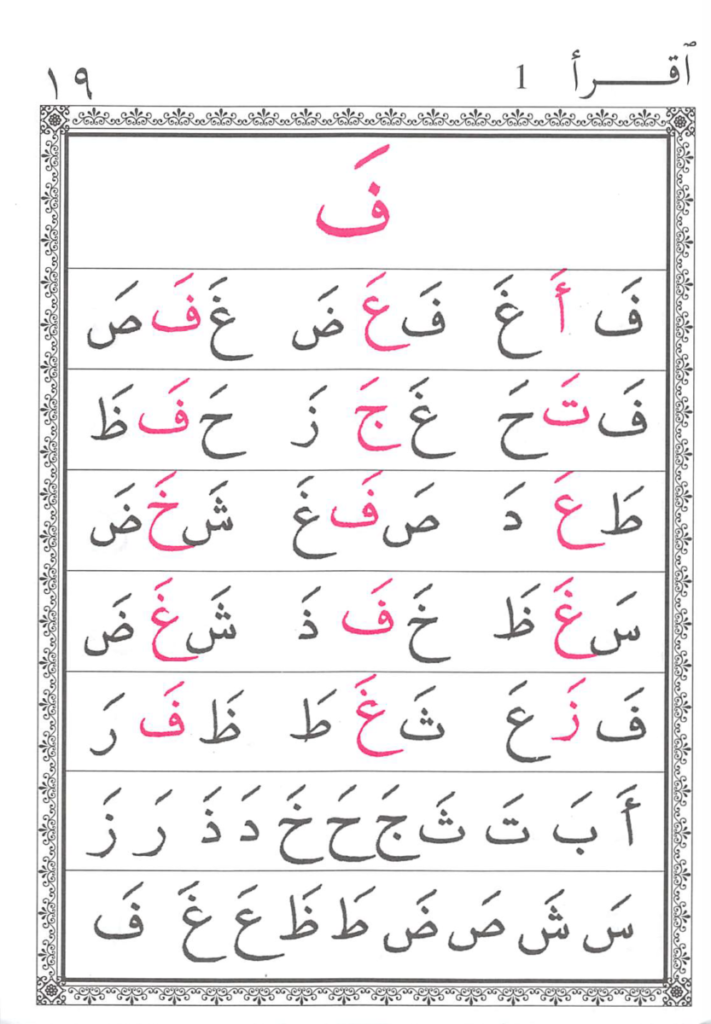
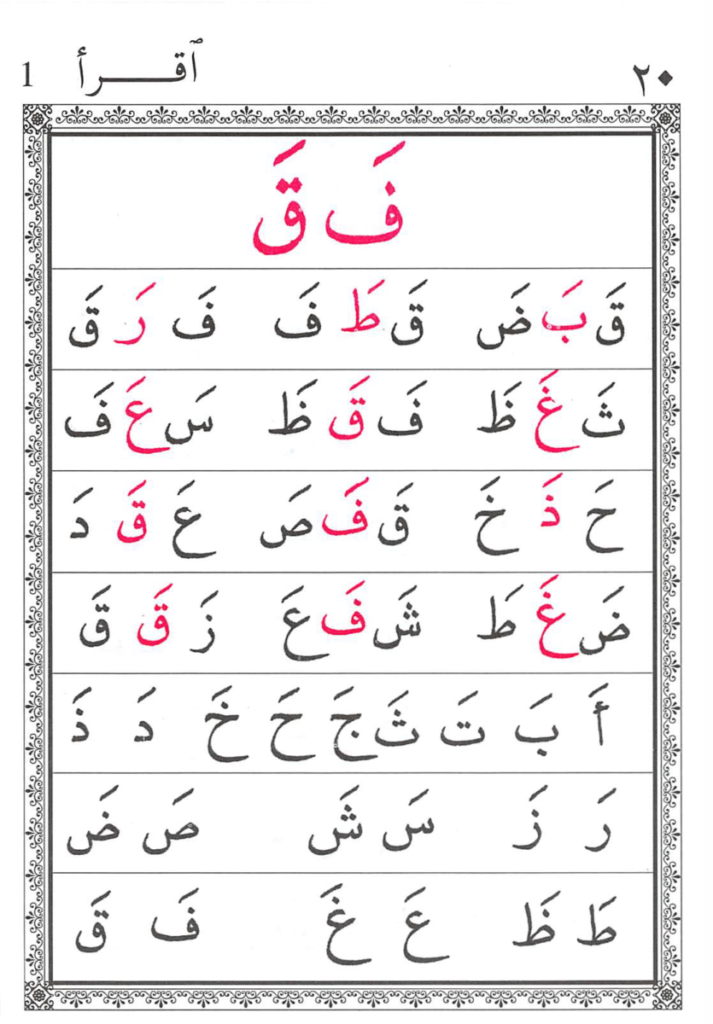
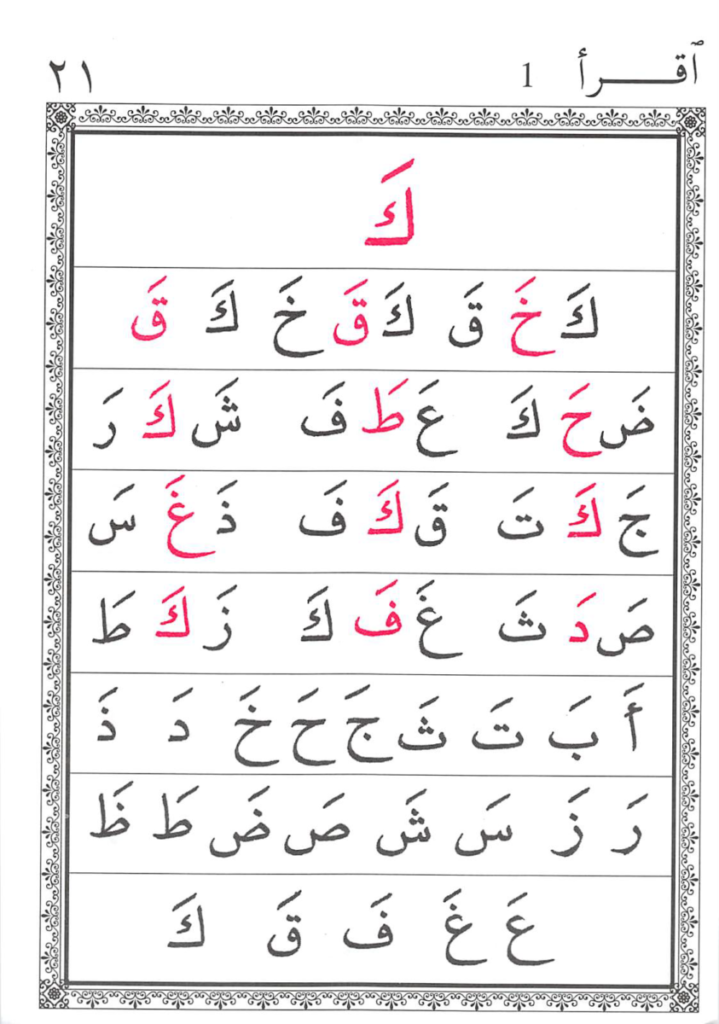
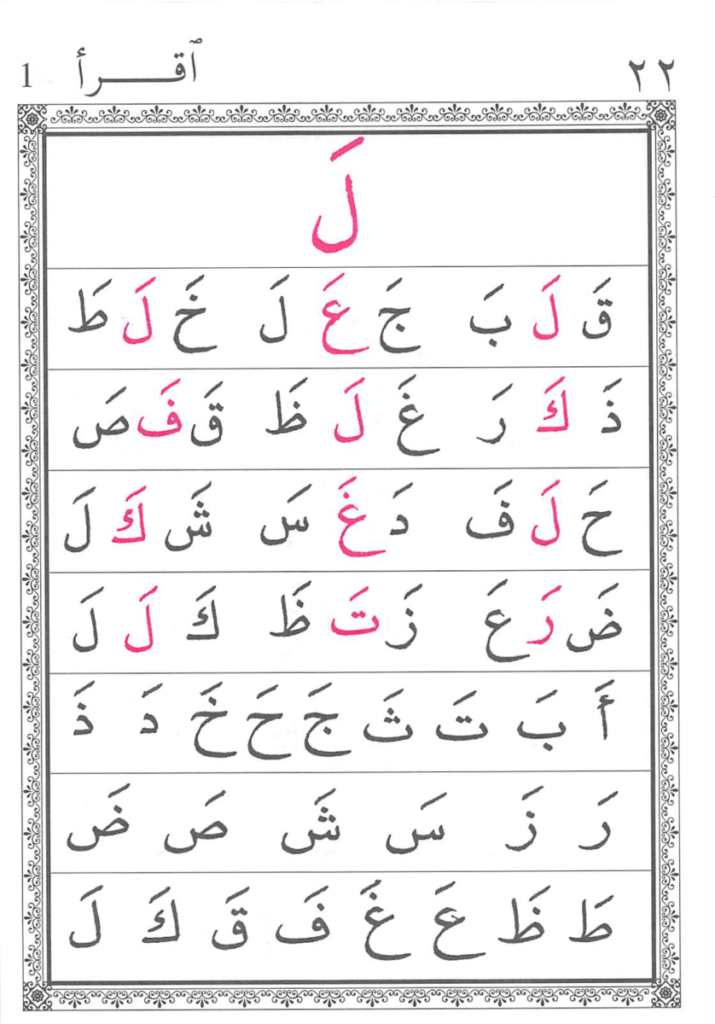
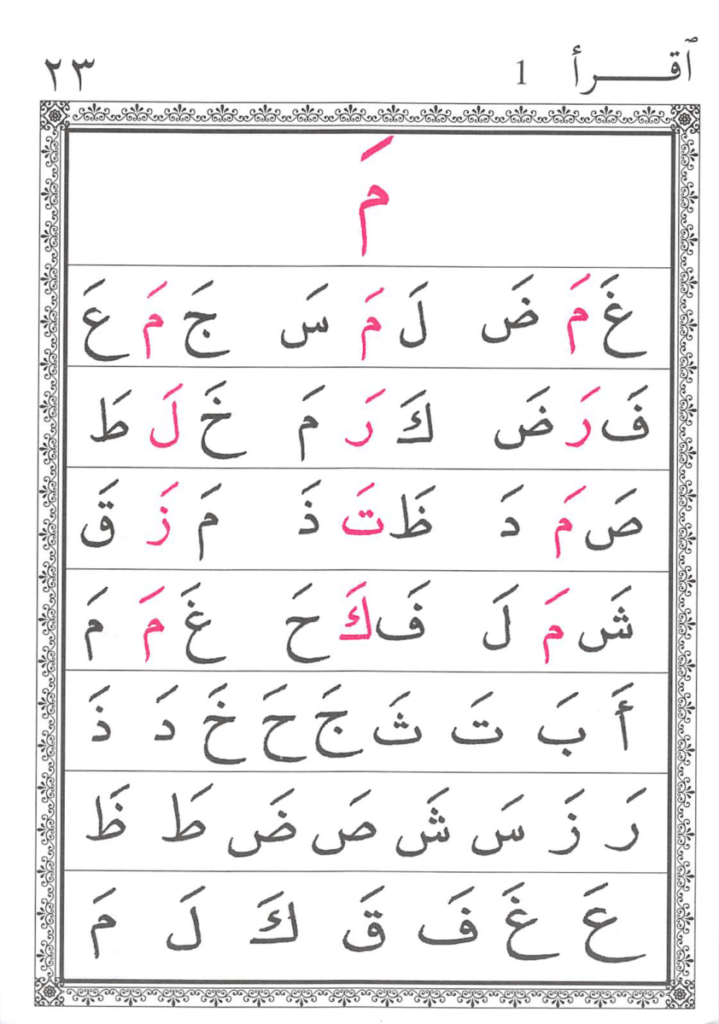
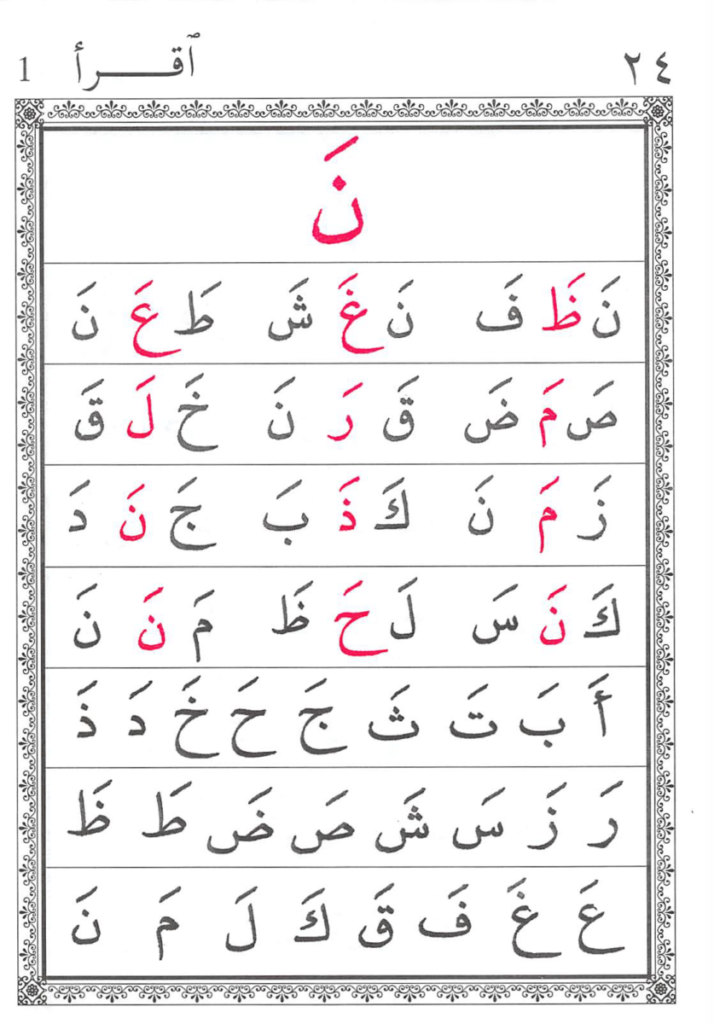
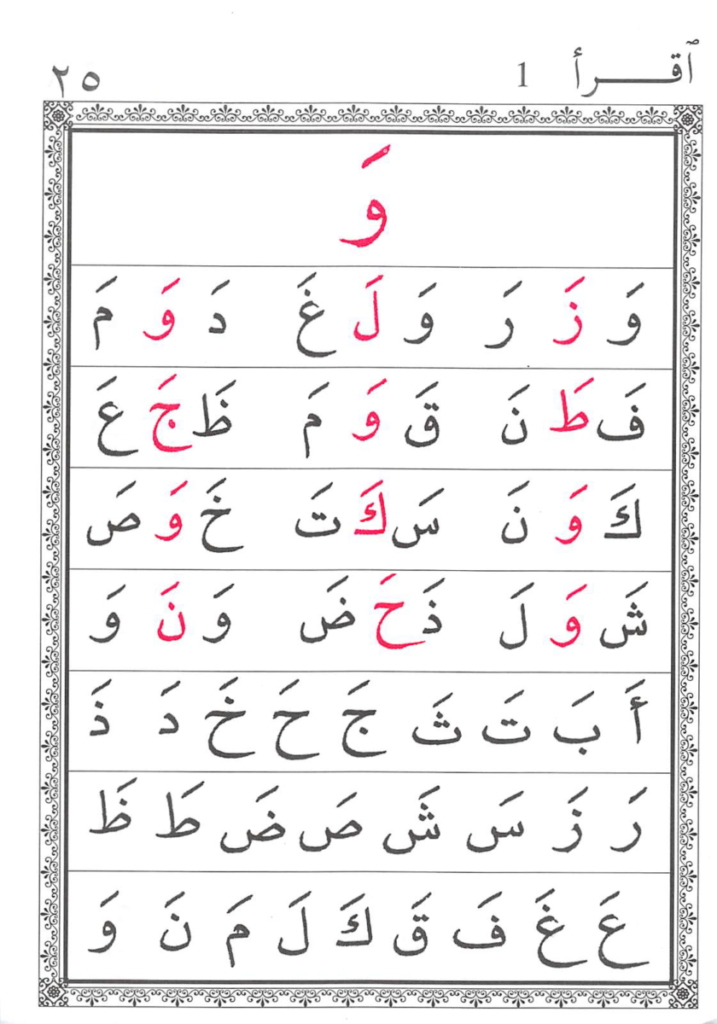
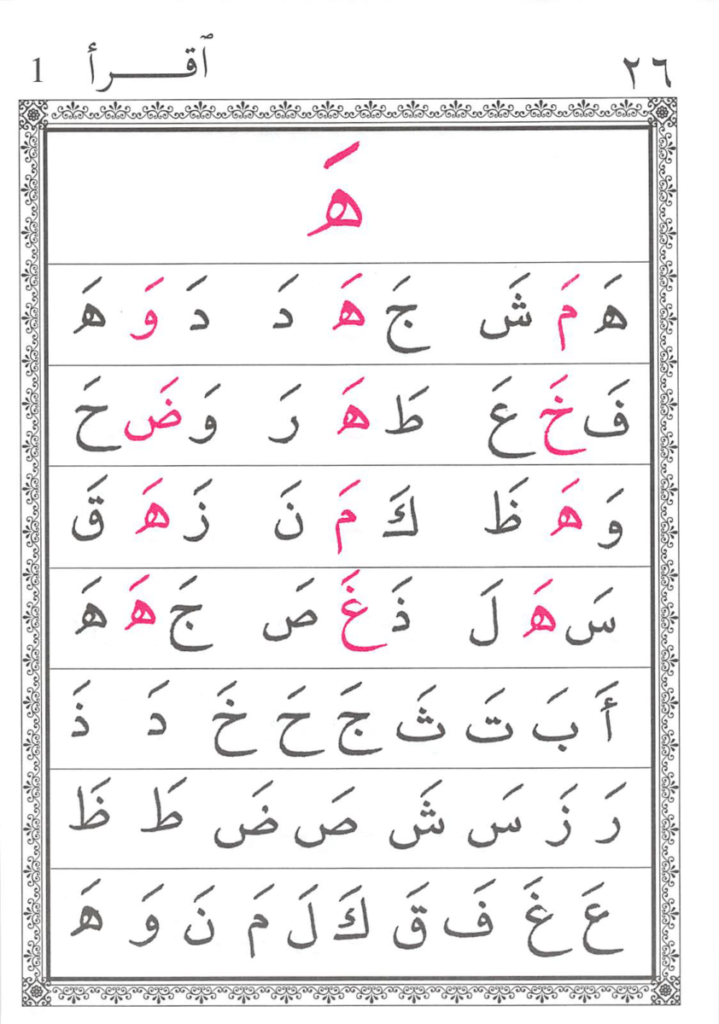
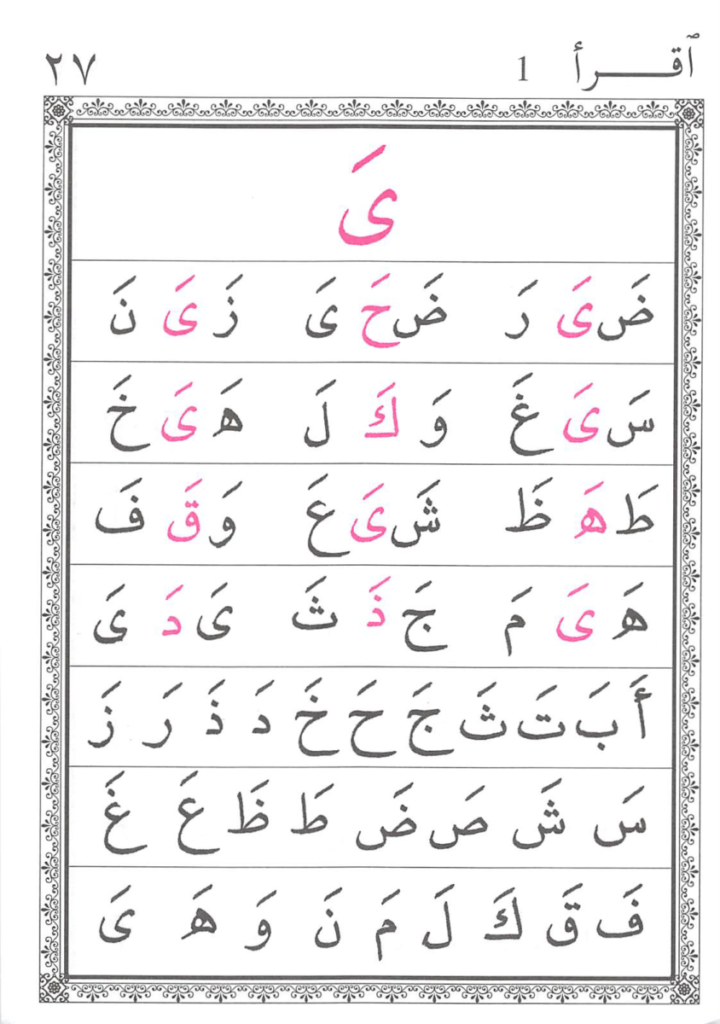
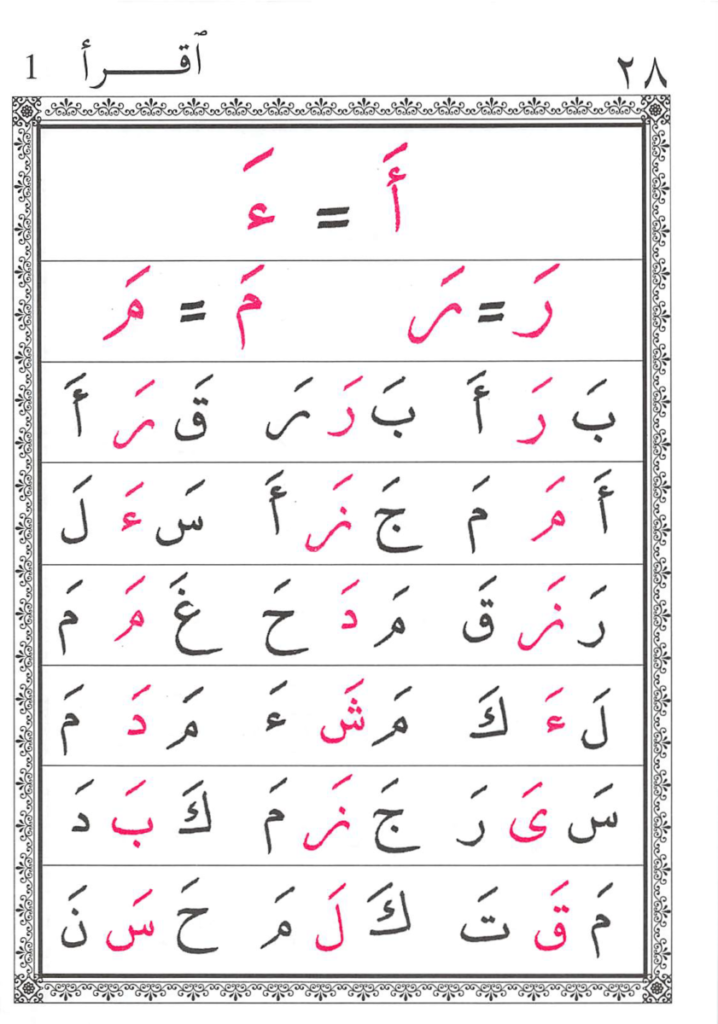
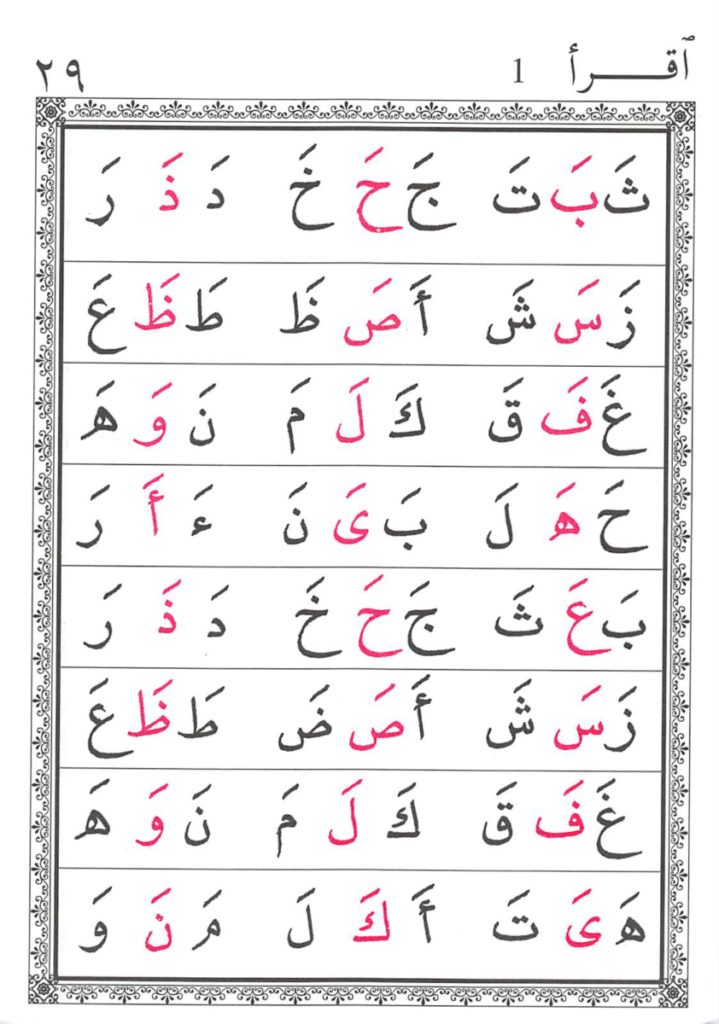
Letters Fa to Ya (ف ق ك ل م ن ه و ي)
In this lesson, you will complete your study of the Arabic alphabet by learning the final six letters:
ف (Fa), ق (Qāf), ك (Kāf), ل (Lām), م (Mīm), ن (Nūn), هـ (Hā), و (Wāw), ي (Yā)
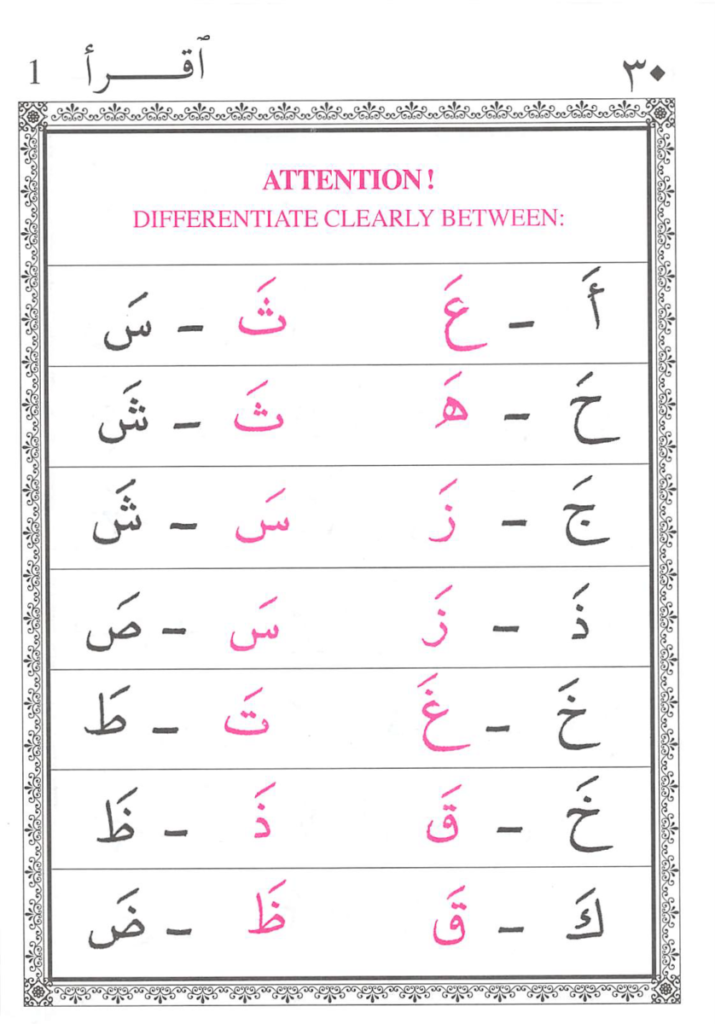
These letters are commonly found throughout the Quran and everyday Arabic words. You will learn to recognize each letter, pronounce it with the correct makhraj (point of articulation), and write it in its isolated form. You will also practice distinguishing between similar sounds, such as Qāf and Kāf, while building fluency through listening, repetition, and writing exercises.
By completing this lesson, you will have learned all 29 letters of the Arabic alphabet, providing a solid foundation for reading Quranic words in the upcoming lessons.
Learning Objectives
By the end of this lesson, you will be able to:
- Recognize the Arabic letters ف، ق، ك، ل، م، ن، هـ، و، ي.
- Pronounce each letter using its proper makhraj.
- Distinguish between similar letters, especially Qāf (ق) and Kāf (ك).
- Write each letter in its isolated form.
- Read all the newly learned letters confidently in sequence and random order.
- Review and read the complete Arabic alphabet from Alif (ا) to Yā (ي).
Letters Covered
| Letter | Name | Transliteration | Pronunciation Guide |
|---|---|---|---|
| ف | Fa | F | Like "F" in fish |
| ق | Qāf | Q | Deep "K" sound from the back of the tongue |
| ك | Kāf | K | Like "K" in kite |
| ل | Lām | L | Like "L" in lamp |
| م | Mīm | M | Like "M" in moon |
| ن | Nūn | N | Like "N" in night |
| هـ | Hā | H | Soft "H" as in house |
| و | Wāw | W | Like "W" in water (or a long "ū" vowel when used with harakah) |
| ي | Yā | Y | Like "Y" in yes (or a long "ī" vowel when used with harakah) |
Pronunciation Focus
Similar Letters
Pay close attention to these pairs:
- ق (Qāf) – Produced from the back of the tongue, deeper in the mouth.
- ك (Kāf) – Produced farther forward than Qāf, like the English "K."
Also review:
- ح (Ḥā) and هـ (Hā) – Both are "H" sounds but come from different places in the throat.
- و (Wāw) and ي (Yā) – Can function as consonants or long vowels depending on the vowels used with them.
Lesson Activities
During this lesson, you will:
- Review previously learned letters.
- Learn the pronunciation and makhraj of the final letters.
- Practice through listen-and-repeat exercises.
- Complete letter recognition activities.
- Practice writing each letter.
- Read the letters in sequence and random order.
- Read the complete Arabic alphabet from ا to ي.
- Receive feedback on your pronunciation.
Homework
To strengthen your learning:
- Practice reading the new letters for 10–15 minutes every day.
- Write each letter 10 times.
- Listen to your teacher's pronunciation recording.
- Practice distinguishing between:
- ق and ك
- ح and هـ
- و and ي
- Review and read the entire Arabic alphabet daily until you can recognize every letter without hesitation.
Success Checklist
By the end of this lesson, you should be able to:
✅ Recognize all the letters introduced in this lesson.
✅ Pronounce each letter using the correct makhraj.
✅ Distinguish between Qāf and Kāf.
✅ Write each letter neatly.
✅ Read the complete Arabic alphabet from Alif (ا) to Yā (ي) confidently.
✅ Be ready to begin reading Arabic letters with vowels (harakat) in the next lesson.
Learning Tips
- Review the alphabet every day rather than only practicing the newest letters.
- Focus on accurate pronunciation before increasing your reading speed.
- Listen carefully to your teacher and repeat each letter several times.
- Writing each letter while saying its name aloud will help strengthen your memory.
- Consistent daily practice, even for just 10–15 minutes, will lead to steady progress.